

You’ve probably heard about HSA before. And there is a reason for it:
- Contributions lower your taxable income
- Growth is tax-free
- Withdrawals for qualified medical expenses are tax-free
No other account gives you such tax benefits. Of course, that comes with a condition – you need to be covered by a high deductible health plan, not enrolled in Medicare, and not claimed as a dependent.
In this newsletter, I wanted to look at 4 things you probably didn’t know about HSA:
1. Investing+ saving receipts
The “shoebox” strategy is a powerful way to maximize your HSA:
- Pay medical expenses out of pocket
- Invest the balance
- Keep every receipt
- Reimburse yourself in x years
Some plans may require you to keep a set amount as cash. My plan requires $500. But the rest, is invested. Here’s my HSA folder:
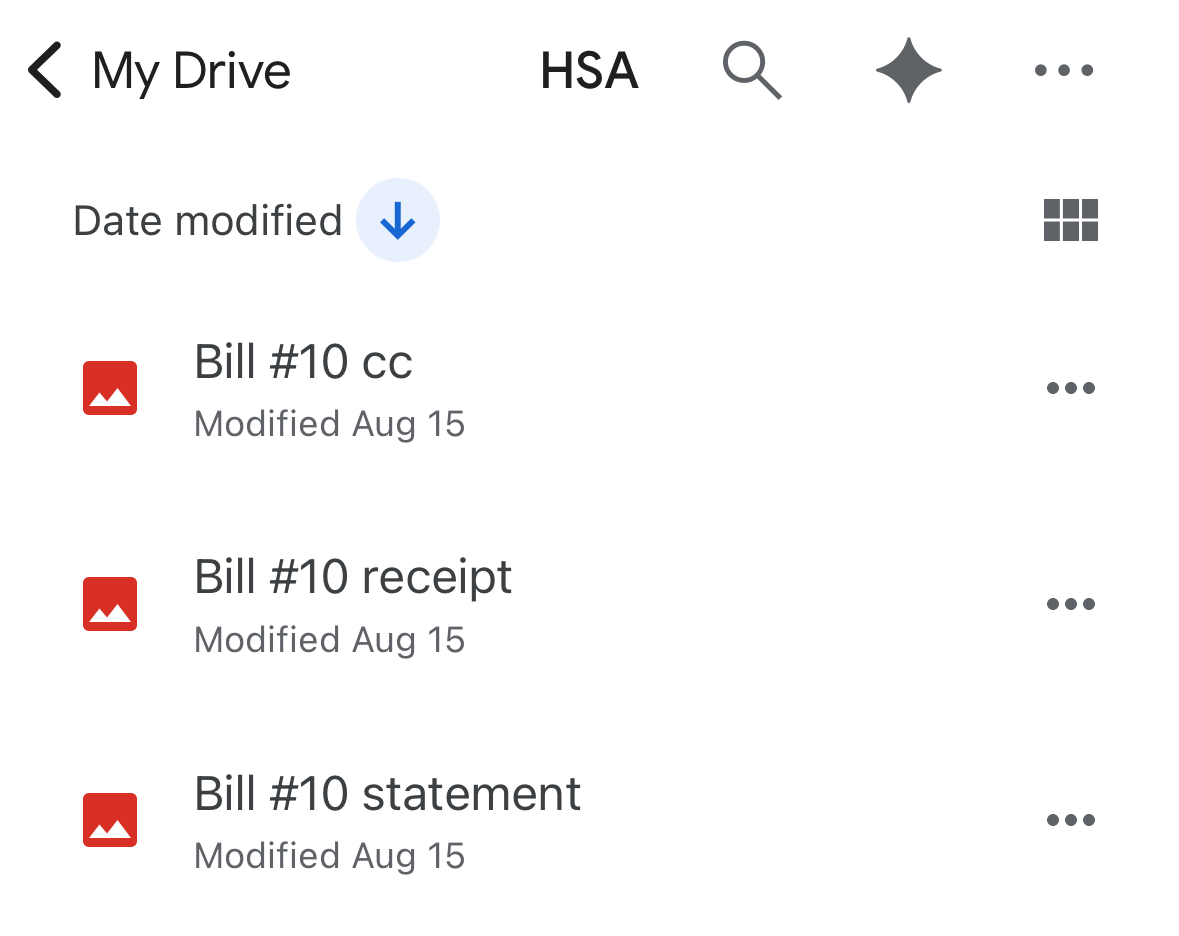
I keep a bill statement, receipt for paying, and credit card screenshot for every receipt.
I also upload receipts for things like a typical prescriptions, or even over the counter medications.
Currently, there is no limit for how long you can wait between when your medical expense happens vs when you withdraw (or “reimburse” yourself from HSA to your bank)
After age 65 you can also take penalty-free withdrawals for any reason (you just pay ordinary income tax, the same as a traditional IRA), while you still keep the option of tax-free medical withdrawals.
2. Inefficiency
HSAs are one of the least tax-efficient accounts to leave to anyone other than a spouse.
If your spouse inherits the HSA, it simply becomes their own. They can continue using it for qualified medical expenses tax free, and the account keeps its status. Nothing changes.
But if anyone else inherits it (your child, sibling, etc), the account stops being an HSA. The entire fair market value (basically the entire account value) becomes ordinary taxable income to that beneficiary in the year you die. And if a person who inherits it is already a high earner, that tax hit might be 30%+.
This is why some people intentionally spend down the HSA later in life, name a charity as beneficiary, or make sure a spouse is the primary beneficiary for as long as possible.
3. 2 states don’t recognize HSAs
California and New Jersey are the only two states that do not conform to the federal HSA tax treatment.
In both states:
- You still get the full federal deduction
- But contributions are not deductible for state income tax purposes
- Investment earnings inside the HSA are taxed by the state each year too (e.g. say you receive $100 of dividends from S&P 500, you have to pay income taxes on it at state level)
In practical terms, these 2 states treat the account more like a regular taxable brokerage account. You still keep the federal triple tax advantage, but the state level benefit is nonexistent (and you have to track it on your own!)
4. Payroll vs Contributions
If you want to put money into an HSA, the preferred method is through your employer. This is because the contribution comes out of your paycheck before FICA taxes. You never pay 7.65% FICA on those dollars you put into the account.
Of course, you can always contribute to HSA yourself (even if your employer doesn’t offer payroll deduction), and you will still get the income tax savings (reported on Schedule 1), but you do not get the 7.65% FICA savings.
HSA is one of the best accounts available. Many young people should absolutely look into considering it.
I hope you enjoyed this one.
Chat next Saturday.