
A reader asked, “What do you believe are the best 3-4 things to do financially well in your 20s?”
I love this question because I believe a few right moves will help set you up for success. Here are 7 things that I would focus on:
- Budget & tracking
I saw so many of my friends entering the workforce and spending all of their money. This happens very often as people just start earning full-time wages.
I suggest setting up a Needs/Wants/Savings budget and tracking as you go along. Ideally, the savings percentage should be at least 15%.
Having a clear understanding of exactly where your money is going every single month is crucial.
I personally have a nice spreadsheet to track money coming in:
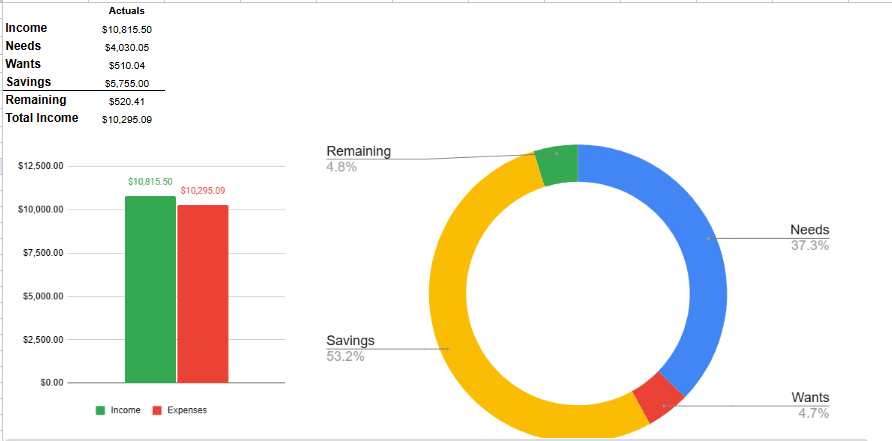
You could also use some budgeting apps, but I’m not the biggest fan of those. I like to control what I see on my spreadsheet.
If you want my spreadsheet, here’s a Google Sheets link to it.
Simply open it and just make your own copy, and follow the “Instructions” tab.
- Emergency Fund
There will always be something unexpected that comes up. It’s inevitable.
Typically, save 3-6 months of your monthly expenses. This could be lower if you don’t have a car payment, live with your parents, etc, but it is a good start.
Make sure to use a high-yield savings account (HYSA) or a money market fund (MMF) for this account. Either of these should get you at least 3.5% yield. I personally use a Treasury MMF for my savings as they come with some tax benefits.
- Retirement plan up to the match
Sign up for your workforce retirement plan ASAP. Pretend that money is not even there.
For example, many plans offer a 3% match on your 3% contributions. This is a great way to start building your financial foundation. Receiving a match is a 100% return on your money. However, keep in mind vesting rules related to keeping that match.
If you are also earning, say, $50,000/yr, you should also select the Roth version of the 401(k) since you will be in a 12% federal marginal rate. You could switch to the Traditional version as you start earning more money. I discussed Roth vs. Traditional in my other newsletter issue.
- Credit Cards
Apply for a credit card to build credit if you don’t have one already. But make sure you pay the balance IN FULL, on time, every month. I suggest a simple credit card setup:
- Citi Double Cash Card for 2% cash back
- Citi Custom Cash 5% cash back on groceries (up to $500/mo)
- Bank of America Custom Rewards Card 5% for Online category (for all online related shopping)
If you are a big overspender and your bank account goes negative every month, you should stay away from credit cards in general, until you build the financial habits.
- Debt
Pay off any debt with interest rates 6.5% or higher. If you have any credit card debt (~25%), get rid of it ASAP. That is a guaranteed, tax-free return on your money.
If you have a large private student loan balance, try to refinance it if rates make sense.
- HSA
HSA account offers triple tax benefits:
- Tax deduction.
- Tax-free growth.
- Tax-free withdrawal for medical expenses
It’s basically a Roth IRA on steroids! Since you are young and ideally in the best health shape you would be, a high-deductible health plan could be a great choice. This would allow you to contribute to an HSA.
Human Capital.
At the end of the day, you have to remember that you are your greatest asset. You have to do everything you can to continue growing professionally.
Figure out what you want to do. Work hard. Get certifications.
When I got my CPA and switched jobs, I increased my salary by 50%. Imagine how much easier investing, paying off debt, or living is after a 50% raise. I’ve since increased my salary by 200%.
It’s a no brainer but frequently missed by young people.
If you have any suggestions on the content you want to see, feel free to reply to this email. I read all the emails!
Chat next week!