

The stock market is almost at an all time highs. My portfolio returned 27% this year:
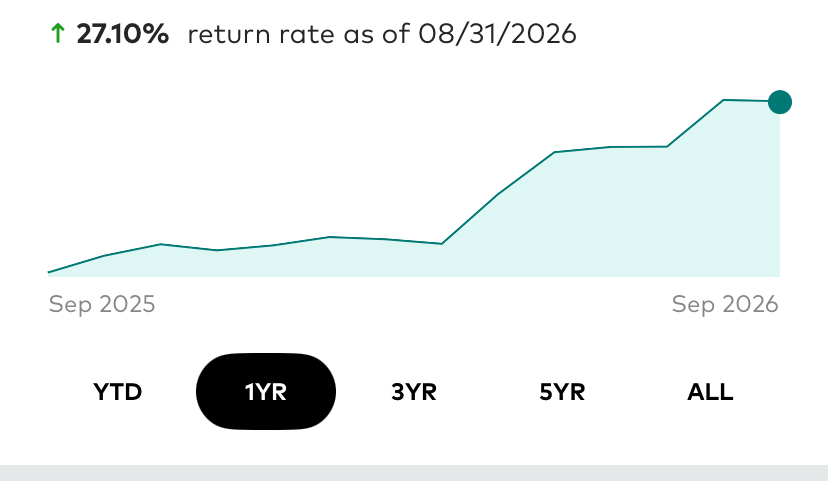
This is a great time to review a few behavioral pitfalls related to investing, especially when the stock market is doing so well. Because if we can prepare for potential downsides in the future, it can help us invest better.
I understand that this might seem like a “boring” topic, but it’s extremely important if you want to succeed with investing for the LONG TERM.
Let’s dive into some of these pitfalls:
Herd behavior
I see this all the time. Herd behavior is an instinct that makes people to mimic the actions of their friends, family, colleagues, and social media, rather than deciding independently based on their own research and goals.
Everyone is talking about Nvidia. Colleagues at my Fortune 200 company, friends, even my barber! You might think, “Everyone is buying it, I should invest too.” Or another one is MU, Micron Technology.
The problem is that herd investors often don’t have a good investment plan. They buy it just because others buy it.
This is when having a plan is important.
For example, I personally invest in $VTI. But it already has a 6.39% invested in Nvidia.
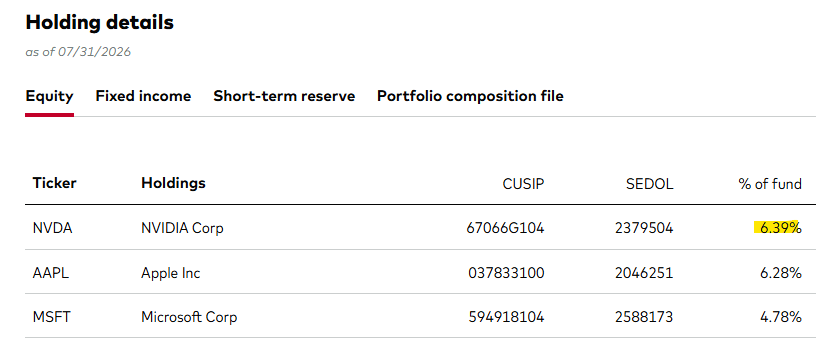
So, there is no need to go and buy the individual stock. You should stick to your strategy, and don’t change it without a good reason it.
Regardless of what the current “popular” stock is, chances are you are already invested in it indirectly through retirement accounts or ETFs. Always think for yourself and stick to your investing strategy.
Recency bias
Recency bias is the tendency to draw conclusions about the future of an investment based only on its recent past.
You might look at a stock, say Nvidia, and see that it returned 38% in a 2025, and 15% so far in 2026. Some people might think, “Wow, it did so well, I should buy it.” But the past doesn’t predict the future. This often leads to people buying high and selling low when their investment doesn’t meet their expectations.
Zoom can be a great example of that:
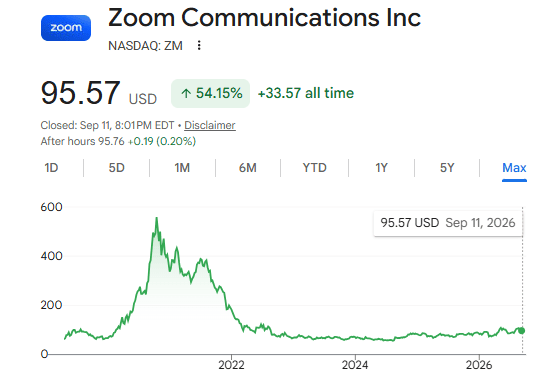
During 2020, the stock went from $60 to $500, and everyone was buying it. Then, over the past five years, it dropped off. Now, over the last 7 years, it returned only 54%, significantly underperforming the S&P 500.
The past is somewhat irrelevant. What matters most is 10-20 year growth. This is why I invest in ETFs, and don’t worry about when the next boom will happen.
Confirmation bias
Confirmation bias is the tendency to seek information that confirms our opinions and ignores information that refutes them.
For example, when researching a stock like Nvidia, you might find articles titled “Why you should buy Nvidia.” Most likely, all the talking points would be something positive about the company. And I’m not just talking about Nvidia. This applies more broadly too.
In this way, you would miss information that presents a different perspective on that specific stock. So, we inadvertently look for information that supports our belief and miss information that presents different ideas.
This one sided view can result in a poor investment choice. If you are researching a stock, make sure you go deeper than a few articles. And if you don’t do this for a living, you will probably just be better off buying index funds.
See you next Saturday!
MC, CPA